Local government minister recognises parish and town councils are central to the future of local governance
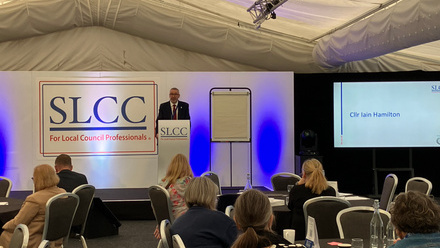
Speaking at our Annual Conference, Baroness Taylor of Stevenage confirmed that parish and town councils will play a key role in neighbourhood governance, community empowerment and the government's wider devolution agenda.
In her keynote address, Baroness Taylor reaffirmed the government's strong support for the sector, describing parish and town councils as "vital to local democracy" and the first point of contact for residents. She highlighted their unique local knowledge, democratic legitimacy and ability to deliver practical solutions that the government cannot replicate.
Baroness Taylor set out the government's vision for devolution, underpinned by the principle that "power should sit closer to the people it affects". She emphasised that the English Devolution and Community Empowerment Act 2026 represents a significant step in shifting power away from Westminster and into local communities. She told attendees, "Our intention is to give communities a stronger voice in shaping the priorities, decisions and services that affect the places where they live."
A key feature of the new legislation is the introduction of a neighbourhood governance duty, which requires local authorities to develop arrangements for neighbourhood-level decision-making. Baroness Taylor made clear that parish and town councils will be integral to these arrangements, stating, "Parish and town councils have an important place in neighbourhood governance and in the wider community empowerment agenda". A new neighbourhood governance framework, due later this year, will set out the principles and guidance for how these arrangements will work in practice, with parish and town councils expected to play a central role.
The local government minister also highlighted new opportunities for the sector through the government's community power programme, including 25 community power pilots across England, backed by £15 million, which will trial new approaches to community-led service delivery.
Baroness Taylor outlined plans to give communities greater control over local assets through the new Community Right to Buy, which will allow communities the first opportunity to purchase valued local buildings and spaces, with time to raise the necessary funding. She also referenced the wider Pride in Place programme, aimed at supporting long-term improvements in neighbourhoods and strengthening community identity and local pride.
Baroness Taylor expressed that parish and town councils should be part of these initiatives wherever they are active in their communities.
Addressing local government reorganisation, Baroness Taylor acknowledged the scale of change but was clear that reform must not come at the expense of local voice.
She emphasised that as councils become larger under new unitary arrangements, the role of parish and town councils will become even more important, commenting, "People feel that they have a voice at the local level. Because if you don't have that, people don't have any trust in what's going on at the national level either."
The minister stressed that the government would not impose a single model of governance from the centre. Instead, local areas will have the flexibility to design arrangements that work for them, with decisions about services and assets made through local partnership and negotiation.
Baroness Taylor's message was clear that parish and town councils are central to the future of local governance. She concluded by underlining the government's commitment to working with the sector, adding, "Our government is serious about devolving power, about rebuilding trust and improving lives in every part of the country".
As England's governance reforms take shape, Baroness Taylor's message was unequivocal that parish and town councils will not simply be consulted on the future of local government. They will help shape it.