Terrorism (Protection of Premises) Bill
The Terrorism (Protection of Premises) Bill requires persons with control of certain premises or events to take steps to reduce the vulnerability of the premises or event to, and the risk of physical harm to individuals arising from, acts of terrorism; to confer related functions on the Security Industry Authority; to limit the disclosure of information about licensed premises that is likely to be useful to a person committing or preparing an act of terrorism; and for connected purposes.
STAGES
House of Commons Second Reading - 14 October 2024
This parliamentary briefing was published on 9 October 2024.
Background
This briefing has been prepared for Members of Parliament ahead of the Second Reading of the Terrorism (Protection of Premises) Bill, scheduled for 14 October 2024.
Key messages
- The first duty of the national government is to keep citizens safe and the country secure. Yet community safety is not just an issue for national government or police and fire and rescue authorities. Local government has a vital part to play, contributing in a variety of ways.
- This includes England's 10,000 parish and town councils who know what's best for their communities and can help the government deliver its missions, including for safer streets and communities.
- They already work with a range of partners such as other tiers of local government and police and fire and rescue authorities to ensure community safety, including assessing and mitigating risks at premises and events.
- The National Association of Local Councils (NALC) supports the new government's aim to strengthen the security of public events and venues and has welcomed the Terrorism (Protection of Premises) Bill, also known as Martyn's Law.
- It is good that the new government has listened and acted upon NALC's concerns in our written evidence to the Home Affairs Committee and further engagement with the government by increasing the standard tier threshold from 100 to 200.
- While the bill will affect all 10,000 parish and town councils (as they will need to assess whether they have premises or events in scope of the legislation), the change to the standard tier threshold will reduce the burden on smaller parish and town councils and village halls.
- However, there are several issues which require clarification at the earliest possible opportunity during the bill's passage through the House of Commons.
- These include: the need for government investment in a tailored support programme for parish and town councils comprising training, guidance and templates to assist with compliance with the new legislation; clarity on liability and scope for events organised by different user groups when the venue is a place of worship; the need for a template standard tier evaluation form and advice; and guidance on how to frame policies suitable for preparing standard tier premises for a possible terrorist attack.
Martyn's Law and parish and town councils
The first duty of national government is to keep citizens safe and the country secure. Community safety is not just an issue for national government or police and fire and rescue authorities. Local government at all levels has a vital part to play, contributing in a variety of ways.
This includes parish and town councils who are local leaders with ‘skin in the game’, who know what's best for their communities and who can help the government deliver its missions, including for safer streets and communities.
Parish and town councils already work with a range of partners such as other tiers of local government and police and fire and rescue authorities to ensure community safety including assessing and mitigating risks at their premises and community events.
NALC supports the government's aim to strengthen the security of public events and venues. We've long recognised the need for legislation that ensures the safety of people using parish and town council buildings and attending their events.
Parish and town councils own, manage, or operate, at a minimum, at least one of a range of premises such as parks and open spaces, indoor and outdoor markets, theatres, cinemas, libraries, leisure centres, museums, sports facilities, beaches, and community/town/village halls. They are also responsible for a range of outdoor community events including markets, Christmas lights switch-ons, fairs, festivals, fetes, and firework displays.
Which is why NALC and our partner organisations such as the Society of Local Council Clerks (SLCC) have welcomed the new government's Terrorism (Protection of Premises) Bill, also known as Martyn's Law.
From the previous government's consultation on the Protect Duty in 2021 through to the publication of their Draft Terrorism (Protection of Premises) Bill in 2023, NALC has engaged positively and constructively with the Home Office to ensure the impact of the legislation on parish and town councils is better understood and to consider successful and practical implementation in the sector.
NALC also established a steering group, along with SLCC, to inform our work on Martyn’s Law, such as engaging with the government on the bill, including during its passage through Parliament, and on support needs such as the production of advice, guidance and other support.
NALC also welcomed the opportunity to submit written evidence in 2023 to the Home Affairs Committee pre-legislative inquiry as the previous draft bill would have implications for all 10,000 parish and town councils. This is because every council would need to ensure they are familiar with the requirements of the legislation and undertake an assessment to determine if any of their premises or events fall within its scope.
In NALC's submission, we set out that security measures and interventions should be reasonable, affordable, and proportionate, as well as calling for the government to engage with the sector more effectively.
NALC particularly highlighted our concern that the capacity-based approach will impose a disproportionate burden on many smaller premises and events, which could lead to them ceasing and thereby handing a win to terrorists who wish to disrupt our way of life.
Instead, an appropriate balance must be achieved between protecting our communities and the places they use as part of their everyday business and ensuring that the access and enjoyment of those places is not unduly restricted.
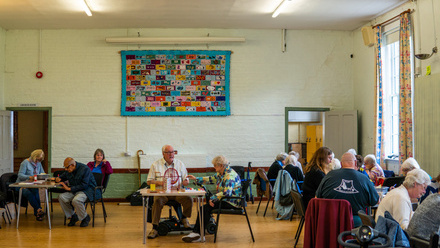
Given that most community, village and town halls have a capacity between 100 and 200, we argued that the proposed threshold requirement of 100 in the previous draft bill for the standard tier was too low for the level of risk involved. We strongly urged the previous government to give further consideration of thresholds or to resolve this issue in another way.
We also highlighted the need for the government to provide resources including funding, undertake a significant communications campaign to raise awareness of the new duty, provide a dedicated programme of tailored support and guidance, and ensure there is an extensive lead-in time for councils and communities to prepare.
NALC also reiterated these concerns again in our response to the Home Office consultation on the standard tier consultation earlier this year.
It is therefore good that the new government has listened and acted upon NALC's concerns and increased the standard tier threshold from 100 to 200 in the new Terrorism (Protection of Premises) Bill published in September 2024. This will reduce the burden on smaller parish and town councils and village halls.
Issues requiring further clarification
However, there remain several outstanding points which councils are seeking clarification on at the earliest opportunity during the bill’s passage through the House of Commons and before it moves to the House of Lords:
- It will be vital for the local council sector to have ongoing support and funding to assist with compliance with the new legislation following Royal Assent and the bill coming into force. As we argued to the Home Affairs Select Committee in our submission to its pre-legislative scrutiny inquiry in July 2023, it is possible that the additional cost burden on local councils overall, beyond familiarisation costs, could run into millions of pounds. Under the Government's new burdens doctrine, we would expect funding to be provided to support the sector to meet any new obligations such as for risk assessments, training for staff, councillors and volunteers, access to tailored advice, guidance, and model documents, and investment in any reasonable prevention and mitigation measures that are deemed necessary. We are also concerned that insurance premiums may increase as a result of the legislation.
- Clarity is needed on liability and scope for events organised by different user groups when the venue is a place of worship.
- Despite the increase in the standard tier threshold, there is a risk that a significant number of village halls and their user groups may not be equipped to comply with the bill’s requirements and will need ongoing compliance guidance and support.
- When the bill becomes law, and the Home Office publishes guidance, it will be vital that templates and guidance tailored for parish and town councils are developed to aid standard tier compliance for the vast majority of parish and town councils in scope, including a template standard tier evaluation form and advice and guidance on how to frame policies suitable for preparing standard tier premises for a possible terrorist attack.
- Additionally, we have heard from councils that it will likely be difficult for them to add anti-terrorism protocols to future health and safety/fire procedures in terms of both time and specialist knowledge, particularly when buildings are not staffed.
- More tailored training will increase protection and raise awareness of the terrorism threat not only for staff, but also for volunteers and councillors on local councils.
NALC remains committed to working positively and constructively with the new government during the passage of the bill and on its implementation. We would like to reiterate our previous offer to help the new government develop a more detailed understanding of the impact of this legislation and its regulatory regime on parish and town councils and to work together to develop an appropriate and tailored government-funded programme of support to help our councils meet the upcoming requirements.